Note
Go to the end to download the full example code.
2D Incremental DIC
This example walks through setting up an incremental DIC caluculation for the simple case of rigid body motion of a plate. Incremental DIC works by updating the reference image at an interval to <do something>. it is good in cases where there is large deformation.
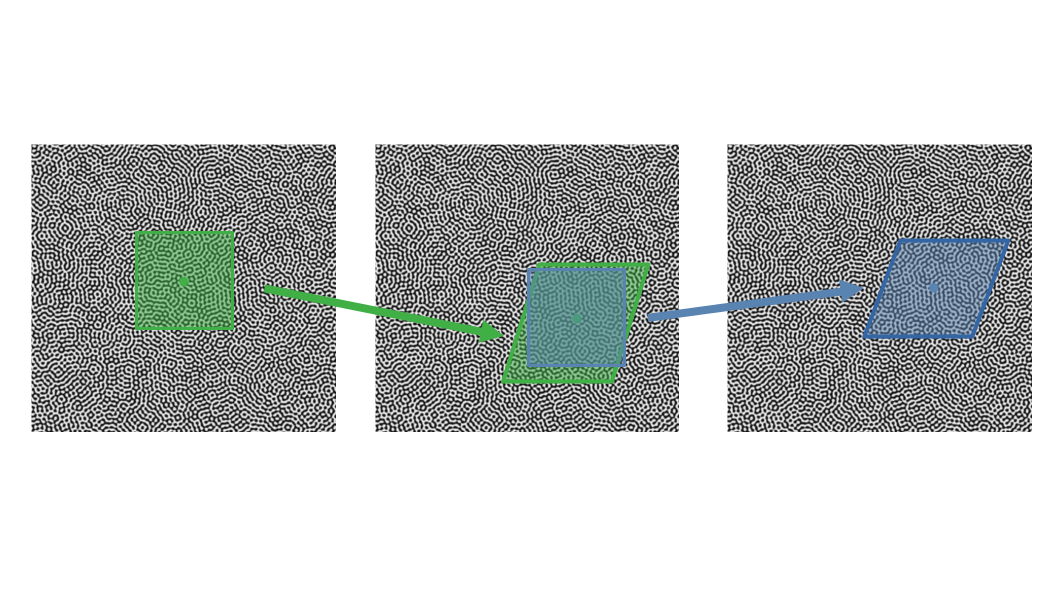
While incremental can usually withstand a greater level of subset warping, it is important to remember that by updating the reference images you are compounding errors from previous correlations. The incremental DIC process as implemented in pyvale is best highlighted in the image below
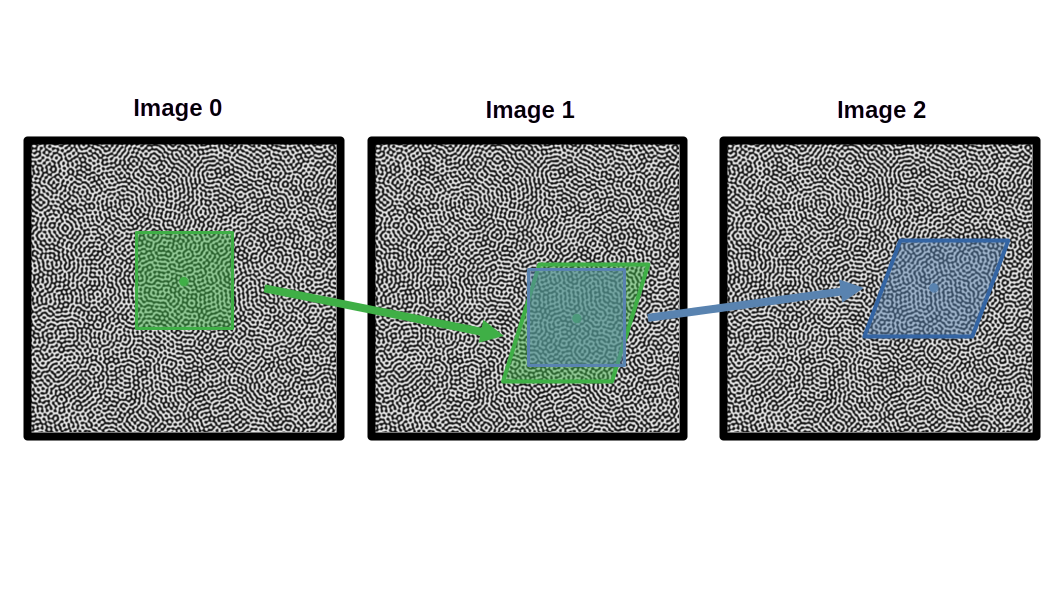
We start in the usual way by selecting the images and building the ROI:
import matplotlib.pyplot as plt
from pathlib import Path
import numpy as np

# pyvale modules
import pyvale.data as dataset
import pyvale.dic as dic

subset_size = 31
ref_img = dataset.dic_plate_rigid_cam0_ref()
def_img = dataset.dic_plate_rigid_cam0_def()

# create a directory for the the different outputs
output_path = Path.cwd() / "pyvale-output" / "incremental"
if not output_path.is_dir():
    output_path.mkdir(parents=True, exist_ok=True)

roi = dic.RegionOfInterest(ref_img)
roi.rect_boundary(left=50,right=50,top=50,bottom=50)
We can now proceed with the incremental DIC calculation. There are two key arguments to be aware of when enabling incremental DIC:
incremental_update(str): Specifies the condition under which the referenceimage is updated. Use
"OFF"to disable incremental DIC. Valid update options are:"IMAGE": Update the reference image every N images, where N is given byincremental_update_value.
"COST": Update the reference image when the mean ZNCC cost across all subsetsfalls below the threshold specified by
incremental_update_value.
"ITER": Update the reference image when the mean number of iterations exceedsthe value specified by
incremental_update_value.
incremental_update_value(intorfloat): The threshold or interval used alongsideincremental_update.
In this example we will proceed with the simple case of updating the reference image after every image correlation procedure. Note: While the displacements are reported as a cumulative value, the reported ZNCC value in the results is relative to the subset in the current updated reference image, NOT the original reference image.
dic.calculate_2d(reference=ref_img,
                 deformed=def_img,
                 roi_mask=roi.mask,
                 seed=[500,500],
                 subset_size=subset_size,
                 subset_step=10,
                 incremental_update="IMAGE", # use "OFF" to disable; can also be "COST" or "ITER"
                 incremental_update_value=1, # update the reference every 1 image(s)
                 output_basepath=output_path,
                 output_delimiter=",",
                 output_prefix="results_inc_")